

How to Choose Curtain Colours for Your Home
Curtains occupy a large part of a room's visual space, so their colour can shape how the whole room feels. The choice becomes easier when you start with the colours already around you. Use your walls, sofa, flooring and natural light as a starting point, then decide whether you want your curtains to blend in or stand out.
Start with the colours already in your room, then compare fabric samples in daylight and evening light before making your final choice.
1. Start with the elements you are keeping
Before choosing a fabric, look at the largest surfaces in your room. Note the wall colour, sofa upholstery and flooring, along with any rug or wooden furniture you plan to keep. Pick one of these as your reference. A curtain colour that relates to an existing element can help the room feel considered without making everything match exactly.
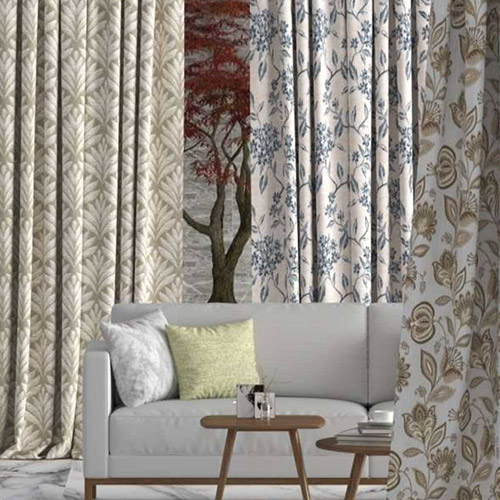
For example, a beige sofa and warm wooden furniture could work with ivory, sand or muted olive curtains. A grey sofa could pair with soft grey, blue or an off-white that suits the wall colour. Treat these as starting points and compare actual samples in your room.
2. Decide whether to blend or create contrast
For a quiet, coordinated look, try curtains close to your wall colour, perhaps a shade lighter or darker. This keeps the window treatment visually subtle and lets other details take attention.
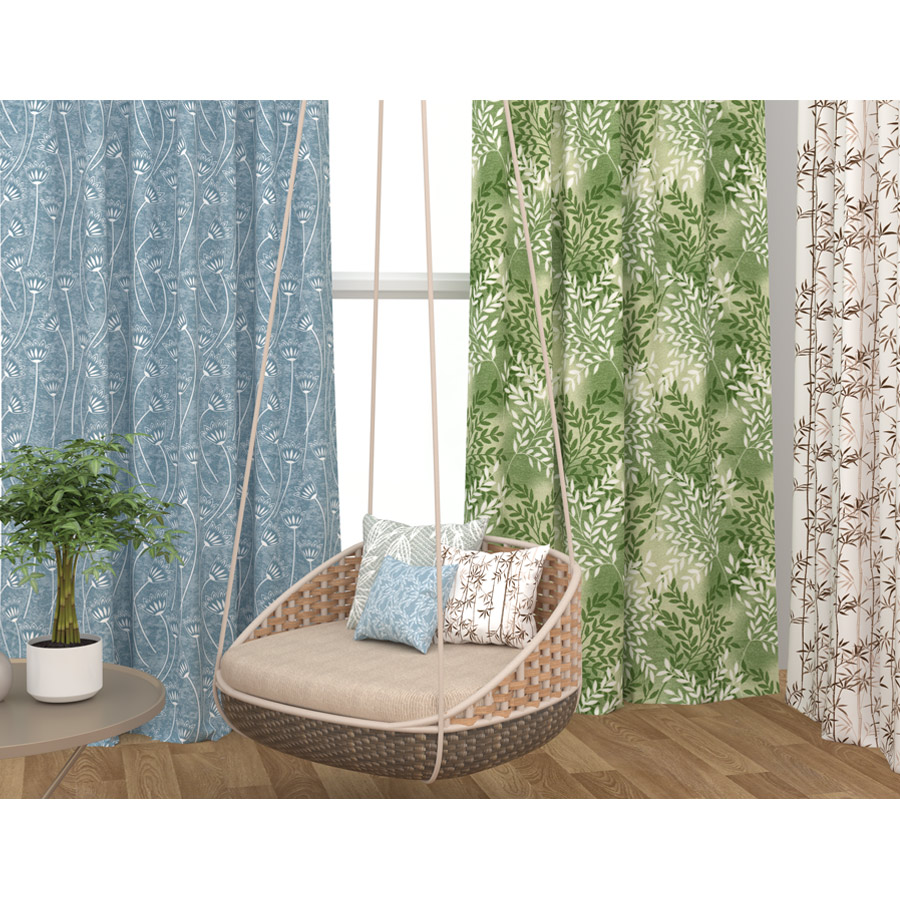
If you want the window to become a feature, try a contrasting colour. Deep blue against pale walls or terracotta beside warm neutrals can create a more expressive look. Repeat a little of that colour in a cushion, artwork or rug to connect it with the rest of the room.
3. Look at the undertones
Two fabrics labelled beige can look quite different side by side: one may lean yellow, another pink or grey. Whites vary too. Place your curtain sample beside the wall and sofa rather than judging it on its own. If the combination feels awkward, try a warmer or cooler version of the same colour before changing your whole plan.
4. Check the colour in daylight and evening light
A fabric can look different near a bright window and under the lamps you use at night. Hold a sample vertically where the curtain will hang, and check it at different times of day. If possible, gather it into folds so you can see the shadows and texture.
Remember that colour alone does not tell you how much light a curtain blocks. If privacy or a darker bedroom matters, check the fabric construction, lining and coverage separately.
5. Keep patterns in balance
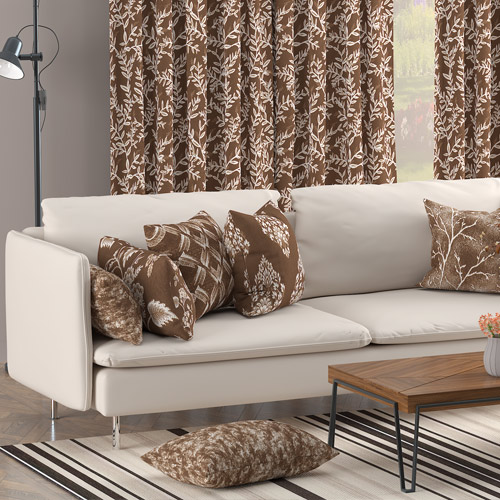
If your sofa or rug already has a strong pattern, a plain or subtly textured curtain is an easy option to explore. If the furniture is mostly plain, patterned curtains can introduce interest. Choose one colour from the pattern that connects with something already in the room.
View a large enough sample to understand the pattern repeat. A small cutting may show the colours but hide the overall design.
Colour combinations to try
- Warm white walls and a beige sofa: ivory for a soft look, or muted olive for a gentle contrast.
- Pale grey walls and charcoal upholstery: soft grey for continuity, or dusty blue for a little colour.
- Cream walls and wooden furniture: sand, warm taupe or terracotta to explore a warm palette.
- Colourful furniture and neutral walls: a plain curtain in a quieter shade from your existing palette.
Before you make the final choice
Shortlist two or three options and compare them in the actual room. Check both the fabric's front and its appearance with light behind it. Confirm the care instructions, lining options and measurements before ordering. A colour you enjoy in your own lighting is a better guide than a screen image alone.
Ready to explore fabrics? Browse the Sunny Drape curtain collection, or contact our team to discuss your room and the colours you have in mind.